

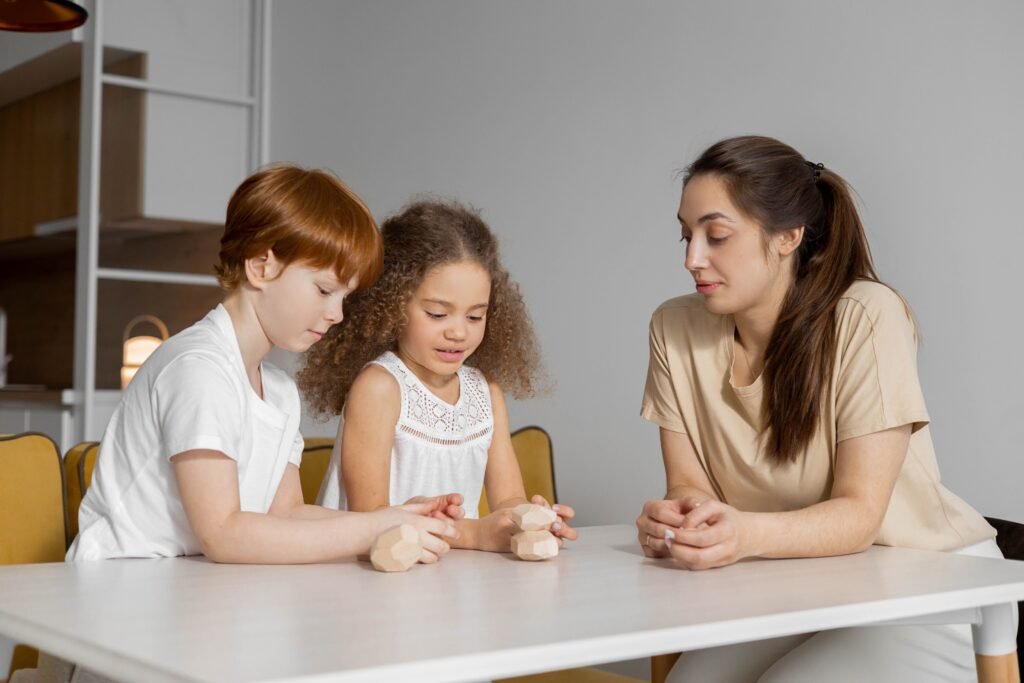
👶 Babysitting Tips: A Complete Guide to Keeping Children Safe, Happy, and Engaged
Babysitting is much more than watching children while their parents are away. It is an opportunity to build trust, encourage creativity, teach good habits, and create happy memories. Whether you are a first-time babysitter, an experienced caregiver, or a parent looking for helpful childcare advice, learning practical babysitting tips can make every babysitting experience safer, smoother, and more enjoyable. 💖
From preparing a safety checklist to planning fun games and establishing calm bedtime routines, a little preparation can make a big difference. The goal is to help children feel secure, respected, and entertained while giving parents peace of mind.
Let’s explore how babysitters and parents can work together to create a positive childcare experience filled with learning, laughter, and love. 🌈
🛡️ 1. Always Put Children’s Safety First
Safety is the foundation of successful babysitting. Children are naturally curious, energetic, and eager to explore their surroundings. A responsible babysitter should understand potential risks and take reasonable steps to prevent accidents.
Before the parents leave, walk through the home together and discuss important safety rules.
Essential babysitting safety checklist:
- 🔒 Keep doors and windows secured according to the parents’ instructions.
- 🧹 Remove small objects, sharp tools, and other choking or injury hazards from children’s reach.
- 🧴 Store cleaning products, medicines, and other hazardous substances safely away from children.
- 🔌 Check that electrical outlets, cords, and appliances are safe and inaccessible where necessary.
- 💧 Never leave young children unattended near water, including bathtubs, buckets, or swimming pools.
- 🍽️ Follow age-appropriate food preparation practices to reduce choking risks.
- 🐕 Ask about pets and follow the family’s rules for safe interaction.
- 🚪 Know the home’s emergency exits and the family’s emergency plan.
Babysitters should also know where to find first-aid supplies and emergency contact information.
Ask parents to provide their phone numbers, another trusted emergency contact, the child’s medical information relevant to care, and the address of the home. Make sure you know how to contact local emergency services.
For infants and toddlers, supervision must be especially attentive. Babies should sleep on their backs on a firm, flat sleep surface without pillows, loose blankets, or soft toys. Never improvise a sleeping arrangement.
Remember: Safety is not about frightening children or preventing them from having fun. It is about creating an environment where they can explore, play, and learn with appropriate supervision. 💕
👨👩👧 2. Communicate Clearly With Parents
Good communication makes babysitting easier for everyone. Parents know their children’s personalities, preferences, routines, and needs better than anyone else. Babysitters can use that knowledge to provide consistent, thoughtful care.
Before the babysitting session begins, ask a few important questions:
- What time do the children usually eat, play, bathe, and sleep?
- Are there any allergies, dietary restrictions, or special care instructions?
- What activities do the children enjoy most?
- Are there particular fears, sensitivities, or behaviors I should know about?
- What should I do if a child becomes upset or refuses to follow instructions?
- Are there rules regarding television, tablets, sweets, or outdoor play?
- Who should I contact if I have a question or an emergency?
It is also helpful to ask parents to write down the daily routine. A written schedule reduces confusion, especially when caring for multiple children.
During the session, provide brief updates if the parents request them. You might share that the children enjoyed a game, finished dinner, or settled down for a nap.
At the end, offer an honest summary of how the day went, including meals, activities, moods, and any concerns.
Open communication builds trust and helps parents feel comfortable leaving their children in your care. 🤝
🎨 3. Plan Fun Games That Encourage Creativity
Children often become restless when they have nothing interesting to do. Planning a few simple activities beforehand helps prevent boredom and makes the experience enjoyable.
The best babysitting games are age-appropriate, easy to organize, and safe for the children involved.
🧩 Indoor games for rainy days
1. Treasure hunt
Hide safe, age-appropriate objects around a room and give children simple clues to find them. For younger children, use picture clues or obvious hiding places.
2. Building challenges
Use large building blocks to create towers, houses, bridges, or imaginary cities. Encourage children to work together and celebrate their creative ideas.
3. Storytelling circle
Begin a story with one sentence and invite each child to add another. The result may be a funny adventure about talking animals, magical gardens, or friendly superheroes.
4. Puzzle time
Choose puzzles that match each child’s developmental level. Puzzles encourage patience, problem-solving, and concentration.
5. Indoor obstacle course
Use safe, stable cushions or floor markers to create a simple course. Keep pathways clear, avoid slippery surfaces and elevated climbing, and supervise closely.
⚽ Outdoor activities
When parents approve outdoor play and the environment is suitable, try:
- Playing catch with a soft ball.
- Taking a supervised nature walk.
- Drawing with sidewalk chalk.
- Blowing bubbles in a safe, open area.
- Playing simple movement games such as follow the leader.
Always follow the family’s rules about outdoor access, swimming, visitors, and neighborhood boundaries. Never take children somewhere without parental permission.
🎭 Pretend-play adventures
Children love pretending to be teachers, doctors, shopkeepers, chefs, or explorers. Provide safe household items or toys and let them develop their own stories.
Pretend play encourages imagination, language development, cooperation, and emotional expression.
The secret is not to plan every minute. Offer a few enjoyable choices and let children participate in deciding what happens next. 🌟
📚 4. Make Learning Part of Everyday Fun
Babysitting can provide opportunities for children to learn naturally without making the experience feel like school.
Simple everyday activities can develop valuable skills.
Try these easy learning ideas:
- 📖 Read a picture book and ask children what they think will happen next.
- 🔢 Count toys while putting them away.
- 🎨 Explore colors by sorting crayons or drawing pictures.
- 🗣️ Practice vocabulary through storytelling and conversation.
- 🧦 Match clean socks or sort toys by shape and size.
- 🌱 Talk about plants, animals, weather, and the natural world.
- 🎵 Sing songs that encourage movement, rhythm, and memory.
For school-age children, ask parents whether homework should be completed during the babysitting session. Provide a quiet place to work and offer encouragement without doing the work for them.
For younger children, focus on play-based learning and activities suited to their abilities.
Avoid comparing siblings or pressuring children to perform. Every child learns at a different pace.
A patient babysitter understands that learning can happen through laughter, curiosity, exploration, and ordinary moments. 💡
🍎 5. Follow Healthy Eating and Snack Routines
Food is an important part of childcare, and babysitters should follow the parents’ instructions carefully.
Before preparing meals or snacks, confirm allergies, dietary restrictions, permitted foods, and any relevant medical instructions.
Simple options may include sliced fruit prepared safely for the child’s age, yogurt, or other foods approved by the parents.
However, food safety is especially important for babies and young children. Cut foods into age-appropriate shapes and sizes, avoid common choking hazards, and ensure children sit upright and remain supervised while eating. Never allow a child to run, play, or lie down with food in their mouth.
Babysitters should also:
- 🧼 Wash their hands before preparing or serving food.
- 🥛 Offer drinks according to the family’s instructions.
- 🍽️ Serve meals at the usual time when possible.
- 🧊 Store perishable food safely.
- 🚫 Never introduce unfamiliar foods without checking with parents.
Do not use sweets as a reward for obedience or force children to finish their plates. Encourage a calm, positive mealtime atmosphere.
For infants, follow the parents’ established feeding plan and any professional guidance relevant to the child’s needs.
Healthy routines help children feel comfortable and give babysitters a predictable structure throughout the day.
💤 6. Create Calm Bedtime and Rest Routines
Bedtime can be challenging when children miss their parents or feel excited about having a babysitter. A familiar routine can help them settle down.
Ask parents about their usual bedtime and follow it as closely as possible.
A gentle evening routine might include:
- 🧸 Putting toys away together.
- 🛁 Following the family’s approved washing or bathing routine.
- 👕 Changing into comfortable sleepwear.
- 📚 Reading a favorite story.
- 🌙 Dimming the lights if appropriate and creating a quiet atmosphere.
- 💗 Offering reassurance before the child settles down.
Avoid exciting games, loud television, and stimulating screen activities immediately before bedtime if these interfere with the child’s routine.
If a child becomes upset, remain calm and acknowledge their feelings. You might say, “I know you miss your parents. They will be back at the time they told us, and I’m here to help you feel safe.”
Never shame a child for crying or being afraid. Do not threaten, frighten, or punish children for struggling to fall asleep.
For babies, always follow safe-sleep guidance and the parents’ established instructions. Do not add pillows, weighted blankets, soft toys, or other unsafe items to an infant’s sleep space.
A peaceful bedtime routine can make the evening easier for both children and caregivers. 🌙
💕 7. Handle Naughty or Difficult Behavior With Patience
Children sometimes refuse instructions, argue with siblings, throw toys, or have emotional outbursts. Such behavior can be challenging, but it is important to respond with patience and consistency.
Instead of immediately labeling a child as naughty, try to understand what might be causing the behavior.
A child may be tired, hungry, overstimulated, frustrated, or struggling to express a feeling.
Here are some helpful approaches:
Stay calm. Children may become more upset when adults shout or react angrily. Speak in a steady, reassuring voice.
Set clear boundaries. Explain rules using simple language, such as, “We use gentle hands,” or, “Toys stay on the floor.”
Offer limited choices. Asking whether a child wants to tidy the blocks first or the crayons first gives them some control while maintaining the expectation.
Recognize positive behavior. Praise specific actions, such as sharing a toy, asking politely, or following instructions.
Redirect attention. If an activity becomes disruptive, suggest another safe option that meets the child’s needs.
Respect emotions while maintaining safety. It is acceptable for a child to feel angry or disappointed, but hitting, biting, and throwing dangerous objects must be addressed immediately.
Never use physical punishment, humiliating language, threats, or unsafe discipline.
Babysitters should also follow the parents’ agreed-upon behavior guidance and communicate honestly about recurring difficulties.
For more advice on understanding challenging behavior, read our related article, “Naughty Children: Understanding Behavior and Encouraging Positive Habits.”
Remember that children need boundaries, but they also need understanding. A caring adult can help them develop emotional awareness and better ways to express themselves. 🌷
📱 8. Use Screens Responsibly
Digital devices can sometimes help entertain children, but screen time should follow the parents’ rules and the child’s age.
Ask whether television, educational programs, video calls, or tablets are permitted. Confirm which content is appropriate and whether any apps or websites are prohibited.
When screens are allowed:
- Choose age-appropriate content approved by parents.
- Keep volume at a reasonable level.
- Avoid unsuitable videos, advertisements, and unfamiliar online interactions.
- Follow the family’s screen-time limits.
- Never post photographs or videos of children online without explicit parental permission.
For babies and very young children, prioritize responsive interaction, movement, conversation, and hands-on play rather than relying on screens to occupy them.
A babysitter should also avoid becoming distracted by personal phone use. Children require active supervision, especially around water, food, stairs, and outdoor play.
Technology can be a useful tool, but it should never replace attentive care. 📵
🧸 9. Adapt Your Approach to Each Child’s Age
Every age group has different needs, abilities, and interests. A successful babysitter adjusts activities and expectations accordingly.
👶 Babies
Babies need attentive supervision, responsive care, safe feeding and sleep practices, and gentle interaction. Follow the family’s instructions for feeding, diaper changes, soothing, and sleep.
Never shake a baby. If a baby cries and you feel overwhelmed, place the baby safely in their crib, step away briefly while keeping the baby safe, and contact a trusted adult for support.
🚼 Toddlers
Toddlers benefit from simple routines, close supervision, movement, and short activities. Use large, safe toys and keep choking hazards out of reach.
Give clear instructions and offer simple choices. Expect frequent changes in attention and mood.
🎒 Preschoolers
Preschoolers often enjoy pretend play, drawing, songs, picture books, and easy puzzles. Encourage independence with tasks such as putting away toys or choosing a story.
Explain safety rules in simple, positive language.
🧑🏫 School-age children
Older children may enjoy board games, crafts, reading, outdoor activities, and age-appropriate science experiments.
Respect their growing independence while maintaining clear boundaries. Follow the family’s rules about internet access, visitors, outings, and communication with other people.
No matter the age, always choose activities that suit the child’s individual development and needs.
🧰 10. Prepare a Babysitting Essentials Kit
A small collection of useful supplies can make babysitting more organized.
Consider preparing a kit with:
- 🖍️ Crayons and paper.
- 📚 A few age-appropriate books.
- 🧩 Simple puzzles or suitable games.
- 🧸 Favorite comfort items approved by parents.
- 🧻 Tissues and wipes.
- 📝 A notebook for routines, meals, and important updates.
- 📋 Emergency contact information and the family’s instructions.
Check with parents before bringing food, toys, art materials, or other supplies into their home. Avoid items that could present choking, allergy, or other safety risks.
Keep the kit tidy and store all materials safely after use.
You do not need expensive toys to be a great babysitter. Creativity, kindness, and thoughtful preparation are much more valuable than a large collection of supplies. ✨
🤝 11. Build Trust Between Babysitters and Parents
Trust develops through reliability, honesty, and respect.
Babysitters should arrive on time, listen carefully to instructions, and ask questions whenever something is unclear. If you are unfamiliar with a task, such as administering medication, do not guess. Follow the parents’ explicit instructions and seek appropriate guidance before proceeding.
Parents can support babysitters by sharing essential information, explaining household expectations, and providing realistic instructions.
Both parties should agree on the schedule, payment, transportation arrangements, emergency procedures, and any limits on activities before care begins.
Babysitters should respect family privacy and never share private details about the children or household with others.
If a problem occurs, communicate it honestly rather than hiding it. Accidents, difficult moments, and unexpected situations are easier to manage when everyone has accurate information.
A strong relationship between parents and babysitters creates a more stable and reassuring experience for children. 💞
🌟 12. End the Babysitting Session Positively
The end of a babysitting session is an opportunity to help children feel secure and parents feel informed.
Before leaving, make sure children are in the agreed-upon care arrangement and that the responsible adult has returned or another authorized caregiver has taken over.
Tidy the play area, put supplies away, and follow the parents’ instructions about dishes, toys, and other household tasks.
Give parents a brief update covering:
- What the children ate and drank.
- Which activities they enjoyed.
- Whether they slept or rested.
- Any emotional or behavioral concerns.
- Any accidents, injuries, or unusual incidents.
- Anything parents may need to follow up on.
Be factual and respectful. For example, instead of saying, “The children were impossible today,” explain, “They had difficulty sharing the building blocks, so we took a short break and tried taking turns.”
This kind of communication helps parents understand what happened and supports consistency in future childcare.
When appropriate, thank the children for spending time with you and mention something positive they did. A warm goodbye can help make the next babysitting session feel familiar and comfortable. 🌈
💖 Final Thoughts: Great Babysitting Begins With Care
Babysitting can be a rewarding experience when it combines safety, patience, creativity, and communication. From organizing enjoyable games to following bedtime routines, the smallest thoughtful actions can make children feel secure and valued.
The most useful babysitting tips are not about being a perfect caregiver. They are about being prepared, staying attentive, respecting family expectations, and treating every child with kindness.
Parents can help by sharing clear instructions, while babysitters can build trust through responsibility and honest communication. Together, they can create an environment where children have opportunities to play, learn, rest, and express themselves.
Whether you are caring for a curious toddler, a creative preschooler, or an energetic school-age child, remember that every child deserves patience, understanding, and safe supervision.
✨ Inspiring Babysitting Quote
“Little hearts grow stronger through safety, patience, and love. Every caring moment can become a beautiful childhood memory.” 💕
Make every babysitting experience an opportunity to spread kindness, encourage learning, and help children feel safe enough to explore the wonderful world around them. 🌷