
✨ Desk Organization Essentials: How to Use Stationery Items to Create a Beautiful and Productive Workspace 🖊️📚
🌸 Introduction: Make Your Desk a Place of Inspiration
Have you ever sat down at your desk, ready to work, study, or write something important, only to discover that your pens are missing, your notes are scattered, and your notebook is buried under a pile of papers? 😅 A messy workspace can make even simple tasks feel overwhelming. Fortunately, organizing your desk doesn’t require expensive furniture or complicated systems. Sometimes, a few useful stationery items can make a wonderful difference!
Desk organization essentials help you create a workspace that feels comfortable, attractive, and easy to use. From notebooks and colorful gel pens to highlighters, sticky notes, and desk trays, each item has a special purpose. When you use these everyday tools wisely, you can save time, manage responsibilities, and make your daily routine more enjoyable.
Whether you’re a student, teacher, writer, office worker, or someone who loves planning, stationery can help you bring order to your thoughts and surroundings. Let’s explore how to use these simple supplies effectively and transform your desk into a place where creativity and productivity grow. 🌷
📝 1. Notebooks: Your Personal Space for Ideas
A notebook is one of the most valuable desk organization essentials. It gives you a dedicated place to collect ideas, write important information, plan your day, and record tasks you don’t want to forget.
Instead of keeping reminders on random pieces of paper, use a notebook to bring your thoughts together.
📖 How to use notebooks effectively
- Daily planning: Write down your three most important tasks each morning.
- Meeting notes: Record important instructions, decisions, and deadlines.
- Study notes: Summarize lessons, write definitions, and review key concepts.
- Creative writing: Keep a notebook for stories, inspirational quotes, and fresh ideas.
- Personal reflection: Write about your achievements, challenges, and goals.
For example, a teacher might use one notebook for lesson preparation and another for student-related reminders. A student could dedicate a notebook to each subject, while a blogger might keep one for article ideas and content planning.
🌟 Choose the right notebook
Consider your daily needs before buying one. A compact notebook is ideal for carrying around, while a larger notebook provides plenty of room for detailed notes. Spiral notebooks are easy to open flat, and dotted or grid notebooks are useful for planning layouts.
Time-saving tip: Keep your main notebook within arm’s reach. When an idea comes to mind, write it down immediately instead of searching for paper.
Remember, a notebook doesn’t have to look perfect to be useful. Its real value comes from helping you organize your thoughts and take action.
🖊️ 2. Gel Pens: Make Writing Comfortable and Enjoyable
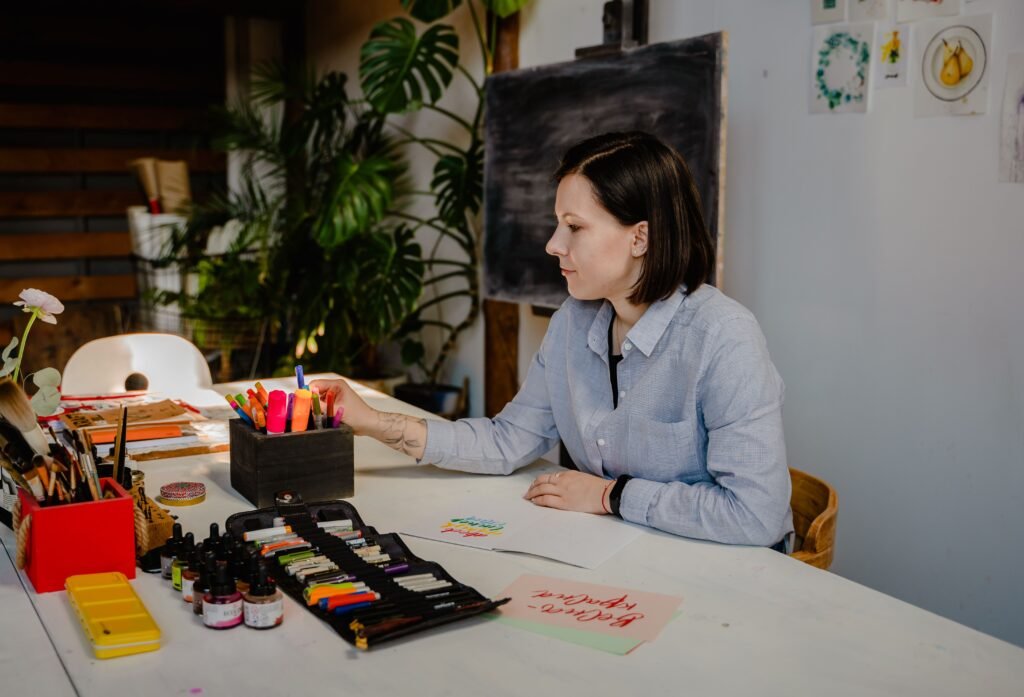
Gel pens are popular stationery items because they offer smooth writing and come in a wide variety of colors. They can make note-taking, journaling, planning, and everyday writing feel more enjoyable.
Although colorful pens are attractive, their greatest benefit is helping you write clearly and organize information visually.
🎨 Creative ways to use gel pens
- Black or blue pens: Use them for regular notes, letters, and important information.
- Red pens: Mark corrections, urgent reminders, or items that need attention.
- Green pens: Record completed tasks, positive achievements, or useful suggestions.
- Purple or pink pens: Highlight personal goals, creative ideas, or special reminders.
You don’t need a different pen for every purpose. Two or three colors are often enough to create a simple and effective system.
For example, when planning your week, you could use blue for appointments, green for personal activities, and red for urgent deadlines. This makes your schedule easier to understand at a glance.
💡 Keep your pens organized
Place your frequently used pens in a pen holder or small desk cup. Store extra pens in a drawer or stationery box. Check them occasionally and remove pens that no longer work.
Time-saving tip: Keep one reliable everyday pen in a consistent place. You’ll spend less time searching for writing supplies whenever you need to record something important.
A beautiful pen can make writing more inviting, but comfort and reliability should always come first. Choose pens that feel good in your hand and suit your writing style. ✍️
🟡 3. Highlighters: Find Important Information Quickly
Highlighters are excellent tools for identifying essential details in books, documents, study notes, and planners. Instead of rereading an entire page to locate one important point, you can use highlighting to guide your attention.
However, the secret to effective highlighting is moderation. Coloring every sentence defeats the purpose!
🌈 Create a simple highlighting system
Assign a meaning to each color and use it consistently.
- Yellow: Main ideas and essential information.
- Pink: Important dates, deadlines, or key terms.
- Green: Examples, useful tips, and supporting details.
- Blue: Definitions, explanations, or information to review later.
For instance, a student preparing for an examination could highlight definitions in blue and important concepts in yellow. A writer reviewing research could highlight useful facts in green and questions requiring further investigation in pink.
Choose a small number of colors that you can remember easily.
📚 Highlight with purpose
First, read the information carefully. Then highlight only the words, phrases, or sentences that deserve special attention. This encourages you to understand the material instead of simply decorating the page.
You can also use highlighters in your daily planner. Highlight important appointments, payment deadlines, project milestones, or personal goals.
Time-saving tip: Use highlighters to mark information you genuinely need to revisit. Your eyes will find the important details more quickly when you return to your notes.
Highlighters are especially helpful when you combine them with a notebook and a consistent note-taking routine. Together, these tools make information easier to review and remember. 🌼
📌 4. Sticky Notes: Small Reminders That Make a Big Difference
Sticky notes may be small, but they can play a major role in keeping your day organized. They provide a quick way to record reminders, capture sudden ideas, and temporarily display information you need to see.
Because they are easy to move, sticky notes are particularly useful when your plans change.
💛 Practical ways to use sticky notes
- Daily reminders: Write down a phone call you need to make or an email you must send.
- Quick ideas: Capture a creative thought before you forget it.
- Short-term priorities: Display the most important task of the day.
- Study reminders: Write down vocabulary, formulas, or questions to review.
- Encouraging messages: Place a positive quote near your workspace to inspire yourself.
Imagine that you’re working on an article and suddenly remember another topic you want to explore. Instead of interrupting your work to research it immediately, write the idea on a sticky note and return to your current task.
Later, you can transfer the idea to your notebook or task list.
🗂️ Avoid sticky-note overload
Although sticky notes are convenient, too many can make your desk look cluttered. Use them for temporary reminders rather than permanent storage.
At the end of each day, review your notes. Complete the relevant task, transfer useful information to your notebook, or remove reminders that are no longer necessary.
Time-saving tip: Keep one small sticky note visible for your top priority. When you finish that task, replace it with the next important action.
This simple habit can help you stay focused without creating a complicated productivity system.
🗃️ 5. Desk Trays: Give Every Paper a Home
Loose papers can quickly take over a desk. Bills, printed documents, letters, worksheets, receipts, and unfinished assignments often accumulate because there is no designated place for them.
A desk tray provides a simple solution by keeping papers together and separating them according to their purpose.
📂 How to organize your desk trays
If you have a two-tier or three-tier tray, assign a clear function to each level.
- Top tray — Action needed: Place papers that require your attention soon.
- Middle tray — In progress: Store documents related to tasks you’re currently working on.
- Bottom tray — Reference: Keep materials you need to consult occasionally.
You can adjust these categories to suit your routine. For example, a teacher may separate lesson materials, student worksheets, and administrative documents. Someone working from home might organize invoices, project documents, and reference papers.
If you have limited space, even one small tray can make a difference.
🧹 Make paper organization a daily habit
Spend a few minutes at the end of each working day sorting the papers on your desk. File documents that need to be kept, recycle unnecessary sheets, and place unfinished work in the appropriate tray.
Avoid using a tray as a place to hide every paper you don’t want to deal with. The purpose is to make your responsibilities visible and manageable, not to move the clutter somewhere else.
Time-saving tip: Place your most urgent papers where you can see them easily, but keep your main working area clear.
When every document has a home, you spend less time searching and more time completing useful work. 📑
✨ 6. Pen Holders and Small Organizers: Keep Everyday Tools Within Reach
A pen holder, pencil cup, or small stationery organizer can help you keep frequently used supplies together.
Without an assigned place, pens, pencils, scissors, rulers, and paper clips can easily disappear beneath notebooks or other objects.
🖇️ What should you keep nearby?
Consider storing these everyday essentials in a small organizer:
- Two or three reliable pens.
- One pencil and an eraser.
- A ruler for drawing lines or measuring.
- Scissors for occasional cutting tasks.
- Paper clips or binder clips for keeping documents together.
- A small selection of sticky notes.
You don’t need to keep every stationery item on top of your desk. Store only the supplies you use regularly within reach, and place less frequently used items in a drawer.
🌿 Choose an organizer that suits your space
A compact pen cup works well for a small desk. A divided organizer is useful when you have several different supplies, while a rotating organizer can make items easier to reach if you have enough room.
You can also reuse a clean jar, a sturdy box, or a small container you already own.
Time-saving tip: Give every frequently used item a fixed place. After using it, return it to that location instead of leaving it wherever you happen to be working.
Small habits like these make your workspace easier to maintain and reduce the frustration of searching for missing supplies.
📅 7. A Desk Calendar or Planner: See Your Responsibilities Clearly
Notebooks are excellent for detailed information, but a calendar helps you see your schedule and deadlines in one place.
A paper calendar or planner can be particularly helpful if you prefer writing down appointments instead of checking your phone repeatedly.
🗓️ Make your calendar work for you
Use it to record:
- Appointments and meetings.
- School or work deadlines.
- Family events and special occasions.
- Project milestones.
- Personal goals and planned breaks.
At the beginning of each week, review upcoming commitments and decide which tasks deserve attention first. Then, check your calendar each morning so you can prepare for the day ahead.
If you use a notebook alongside your calendar, keep their purposes distinct. Let the calendar show when something must happen and the notebook explain what you need to do.
Time-saving tip: Write deadlines in your calendar as soon as you learn about them. This reduces the risk of forgetting important commitments.
A calendar also helps you avoid overloading your schedule. When you can see your responsibilities clearly, it’s easier to leave room for rest, unexpected tasks, and personal activities. 🌻
📎 8. Paper Clips, Binder Clips, and Folders: Keep Documents Together
Small stationery accessories often receive less attention than notebooks and pens, but they can save considerable time.
Paper clips hold a few sheets together without permanently attaching them. Binder clips secure thicker stacks of documents, while folders help separate different subjects or projects.
📁 Use each item for the right purpose
- Paper clips: Group related notes, receipts, or loose pages.
- Binder clips: Hold thicker document bundles securely.
- Folders: Separate papers by subject, project, or category.
- Envelopes: Keep small documents or loose items together when appropriate.
For example, if you’re preparing a presentation, you could keep research notes in one folder, printed materials in another, and final documents in a clearly labeled section.
For students, labeled folders can make it easier to keep assignments from different subjects separate. For writers, they can organize research, outlines, drafts, and completed projects.
Time-saving tip: Label folders with short, clear names. You should be able to identify the contents without opening every folder.
Remember to review your files regularly. Keep important documents, discard unnecessary duplicates, and store completed projects where you can find them later.
🎨 9. Combine Your Stationery Items Into One Simple System
Each stationery item is useful on its own, but the real benefit comes when you use them together.
You don’t need an elaborate desk setup. A simple system that matches your daily routine is often more effective than a complicated arrangement you struggle to maintain.
🌷 An example of a coordinated desk system
Imagine that you need to complete an assignment, prepare a report, or write an article.
- Start with your planner: Identify the task and its deadline.
- Use your notebook: Write the steps required to complete the task.
- Choose your gel pens: Record notes clearly and use a consistent color system.
- Highlight key information: Mark important details that deserve further attention.
- Use sticky notes: Capture small reminders without interrupting your concentration.
- Organize documents in a tray: Keep unfinished papers separate from completed work.
- File the finished materials: Place documents in their appropriate folders when you’re done.
This process creates a natural path from planning to action and completion.
The goal isn’t to make every page colorful or every object perfectly arranged. The goal is to reduce unnecessary decisions, make information easy to find, and help you work with greater confidence.
🧹 10. Five Minutes of Desk Organization Can Transform Your Day
Even the most beautiful workspace can become cluttered when you’re busy. That’s why a short daily reset is one of the most practical desk organization essentials.
You don’t have to spend an hour cleaning your workspace. A few minutes of consistent attention can help you maintain order.
⏰ Your five-minute desk reset
- Minute 1: Remove rubbish, empty packaging, and unnecessary items.
- Minute 2: Return pens, highlighters, scissors, and other supplies to their places.
- Minute 3: Sort loose papers into your desk tray or folders.
- Minute 4: Review sticky notes and update your task list.
- Minute 5: Prepare your notebook, planner, and essential supplies for tomorrow.
If your desk is particularly cluttered, start with one small area rather than trying to organize everything at once.
You can also adjust your setup every few weeks. If you notice that you rarely use an item, move it out of your immediate workspace. If you frequently search for something, give it a more convenient location.
Remember: Organization should make your life easier. It should not become another demanding task on your to-do list. 💚
🌼 11. How to Choose Desk Organization Essentials on a Budget
Creating a productive workspace doesn’t require buying every stationery item available in a store. Start with the supplies that solve your biggest problems.
If you often forget tasks, begin with a notebook and planner. If your desk is covered in loose papers, prioritize a tray and folders. If your pens are always missing, invest in a simple pen holder.
💰 Shop thoughtfully
- Start with what you own: Gather usable stationery from drawers, bags, and storage boxes.
- Choose multipurpose items: A notebook can serve as a planner, journal, and idea book if you organize it well.
- Reuse containers: Clean jars and small boxes can hold pens, clips, and other supplies.
- Buy only what you need: Avoid purchasing several similar items simply because they look attractive.
- Prioritize quality where it matters: A comfortable pen or durable notebook may be more useful than a large collection of inexpensive supplies that don’t suit your needs.
You can still create a beautiful workspace with coordinated colors, a tidy arrangement, and a few favorite stationery pieces.
For an attractive but practical setup, choose two or three complementary colors and use them consistently across your pens, notebook, folders, and sticky notes.
A thoughtful desk arrangement can be both affordable and inspiring. 🌸
💖 12. The Connection Between an Organized Desk and a Positive Mindset
Your workspace doesn’t need to be perfect to support your well-being, but an organized environment can make everyday activities feel more manageable.
When your essential supplies are easy to find, you may spend less time feeling frustrated and more time focusing on the task in front of you. Writing down responsibilities can also help you turn vague worries into specific actions.
Stationery can even make routine tasks feel more personal. A favorite notebook may encourage you to reflect, colorful pens can make planning enjoyable, and a sticky note with an encouraging message can remind you to approach your day with patience.
However, remember that organization is a tool, not a measure of personal worth. Some days will be busy, and your desk may become untidy. That’s normal. You can always begin again with one small step.
Try to create a workspace that supports your needs rather than one that simply looks impressive. Choose supplies that are comfortable, accessible, and genuinely useful.
When your surroundings support your habits, even ordinary activities such as studying, teaching, writing, and planning can become more pleasant. 🌷
🌟 Conclusion: Small Stationery Items, Big Everyday Benefits
Desk organization essentials are more than attractive accessories. When used thoughtfully, notebooks, gel pens, highlighters, sticky notes, desk trays, calendars, and folders can help you save time, organize information, and manage daily responsibilities.
The secret is to give every item a purpose. Use notebooks to collect ideas, pens to record information, highlighters to identify important details, sticky notes for temporary reminders, and trays to keep papers under control.
Start small. Choose three stationery items that would make your daily routine easier, organize them in convenient places, and build simple habits around using them. As your needs change, adjust your system to keep it practical.
Your desk doesn’t need to be expensive or perfect to inspire you. With a little creativity and consistency, it can become a welcoming space for learning, planning, and achieving your goals.
💬 An Inspiring Quote About Organization
“A clear desk creates space for clear thoughts, meaningful ideas, and beautiful new beginnings.” ✨🖊️📚
Let your stationery remind you that productivity doesn’t always begin with a big change. Sometimes, it starts with a notebook, a pen, and one small step toward a more organized day. 💕