

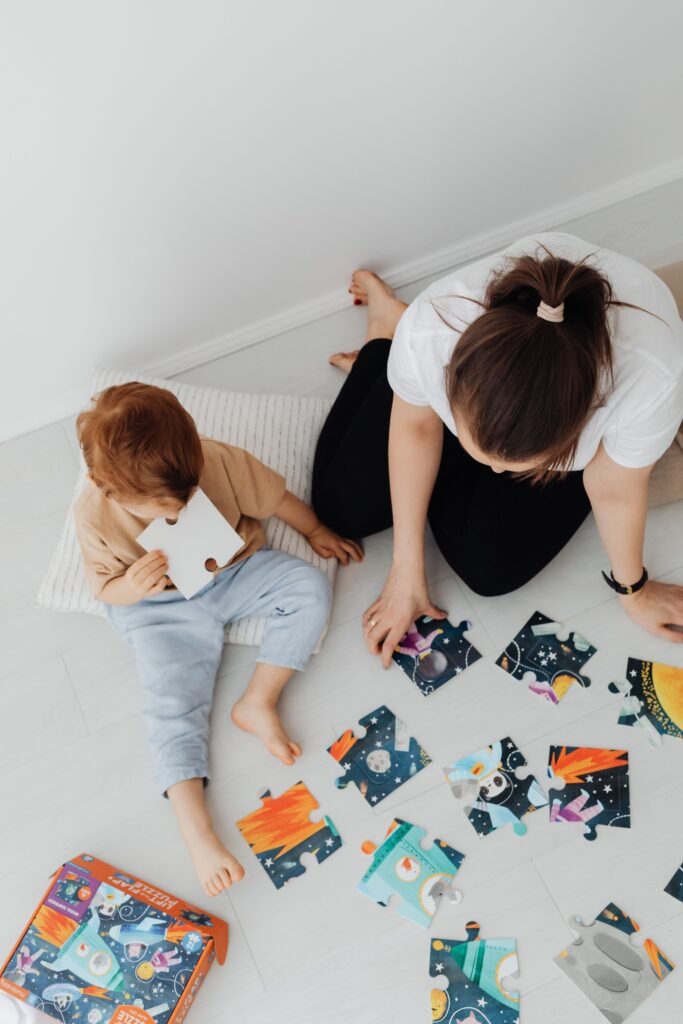
🧩 Solving ‘Puzzle’ Games with Your Kids builds up their Cognitive Skills Smartly
Spending quality time with children is one of the greatest investments parents can make in their future. Among the many activities that strengthen family bonds and support learning, solving puzzle games together stands out as both enjoyable and highly beneficial. Whether it is a jigsaw puzzle, a word puzzle, a number puzzle, a maze, a logic challenge, or a picture-matching game, puzzles encourage children to think carefully, observe details, and discover solutions step by step. More importantly, when parents participate alongside their children, the activity becomes a powerful lesson in patience, teamwork, communication, and wise problem solving.
Puzzle games are not simply a way to pass the time. They are mental exercises that strengthen the brain while teaching children how to approach challenges calmly and logically. Every puzzle presents a problem that needs to be understood, analyzed, and solved. As children search for patterns, test ideas, and correct mistakes, they develop cognitive skills that support success in school and in everyday life. At the same time, they learn that difficult tasks can be completed through focus, persistence, and thoughtful effort rather than frustration or giving up.
When families solve puzzles together, children also gain emotional confidence. They feel supported, encouraged, and valued. Instead of facing a challenge alone, they experience the joy of working with someone who guides them, celebrates their progress, and helps them learn from mistakes. These positive experiences build resilience and create happy memories that children often remember for years.
Puzzle Games Strengthen Cognitive Development
Cognitive skills are the mental abilities that help children learn, remember, reason, and solve problems. Puzzle games exercise many of these skills at the same time. Children must observe carefully, compare pieces or clues, recognize patterns, and make decisions. This combination of thinking processes strengthens the brain in a natural and enjoyable way.
For example, when a child works on a jigsaw puzzle, they examine shapes, colors, and images to determine where each piece belongs. This activity improves visual perception and spatial awareness. A word puzzle encourages vocabulary growth and language recognition, while a number puzzle strengthens logical thinking and mathematical understanding. Because puzzles engage multiple parts of the brain, they provide a well-rounded mental workout that supports overall intellectual development.
Improving Memory Through Play
Many puzzle games require children to remember information while searching for solutions. They may need to recall where a matching card was placed, remember a clue from an earlier step, or keep track of numbers and patterns. This repeated use of memory strengthens both short-term and working memory.
Strong memory skills help children in many areas of life. They become better at following instructions, remembering school lessons, organizing tasks, and learning new concepts. Because puzzles make memory practice feel like a game rather than a test, children remain motivated and engaged while their brains continue to grow stronger.
Teaching Logical and Critical Thinking
One of the greatest benefits of puzzle solving is the development of logical thinking. Children learn to examine a situation, identify what is known, and determine what steps might lead to a solution. Instead of guessing randomly, they begin to think in an organized and reasoned way.
Critical thinking develops when children ask questions such as:
- What pieces fit together?
- What clue am I missing?
- Why did this attempt not work?
- What should I try next?
These questions encourage deeper thinking and help children understand that problems can be solved through careful analysis. This habit becomes valuable far beyond puzzle games because it prepares them to handle academic challenges, social situations, and everyday decisions wisely.
Building Patience and Concentration
Modern children are often surrounded by fast-moving entertainment that provides instant results. Puzzles teach a different and very important lesson: meaningful success sometimes requires time and concentration. A puzzle cannot usually be completed in a few seconds. Children must stay focused, pay attention to details, and continue working even when the answer is not immediately obvious.
As they practice this kind of sustained attention, their concentration gradually improves. They become more capable of completing homework, reading books, listening carefully, and finishing tasks without becoming easily distracted. Patience grows as they discover that steady effort eventually leads to success.
Encouraging Wise Problem Solving
Life is full of problems that require thoughtful solutions. Children who regularly solve puzzles learn a simple but powerful process:
- Observe the situation carefully.
- Break the problem into smaller parts.
- Try a possible solution.
- Evaluate the result.
- Adjust the approach if necessary.
This is exactly the process used by successful students, professionals, and leaders when facing real-life challenges. Puzzle games provide a safe environment where children can practice these skills without fear of failure. They learn that mistakes are not disasters; they are opportunities to think differently and try again.
Strengthening Parent–Child Communication
Solving puzzles together creates natural opportunities for conversation. Parents can ask questions, give gentle hints, and encourage children to explain their thinking. Children, in turn, learn to express ideas, ask for help, and listen to suggestions.
Simple phrases such as “What do you notice here?” or “Why do you think this piece belongs there?” encourage children to think aloud and organize their thoughts. These discussions improve language skills and deepen understanding while making the activity warm and interactive. The shared experience also strengthens trust and emotional connection within the family.
Developing Teamwork and Cooperation
When a family works on a puzzle together, everyone contributes in different ways. One person may sort pieces by color, another may build the border, and a child may find matching images. Children learn that cooperation often leads to faster and better results than working alone.
Through teamwork they discover important life lessons:
- Listen to other people’s ideas.
- Share responsibilities fairly.
- Respect different ways of thinking.
- Celebrate group success together.
These social skills are essential for friendships, classroom activities, sports, and future careers.
Boosting Confidence and Self-Esteem
Every completed puzzle gives children a sense of achievement. They can see the result of their effort right in front of them. This visible success builds confidence and encourages a positive attitude toward learning.
Parents can strengthen this feeling by praising effort rather than perfection. Comments such as “You kept trying until it worked” or “I like how carefully you looked for the right piece” teach children that persistence and thoughtful effort are valuable qualities. Over time, they begin to believe in their ability to solve difficult problems independently.
Learning to Handle Frustration Calmly
Not every puzzle is solved immediately. Sometimes a piece seems impossible to find, a clue is confusing, or a strategy fails. These moments teach emotional regulation. With gentle guidance, children learn to pause, take a breath, and try a different approach instead of becoming upset.
This ability to stay calm during challenges is one of the most important life skills a child can develop. Whether facing a difficult school assignment, a disagreement with a friend, or a future workplace challenge, the habit of responding thoughtfully rather than emotionally will serve them well.
Different Types of Puzzles and Their Benefits
Jigsaw puzzles
Improve visual-spatial skills, attention to detail, and planning.
Word puzzles
Expand vocabulary, spelling, reading comprehension, and language confidence.
Number puzzles
Strengthen logical reasoning, calculation skills, and pattern recognition.
Maze puzzles
Teach planning, decision-making, and forward thinking.
Memory matching games
Develop concentration, visual memory, and quick recall.
Logic riddles and brain teasers
Encourage reasoning, creativity, and flexible thinking.
By offering a variety of puzzles, parents help children develop a wide range of cognitive abilities while keeping learning fun and interesting.
Creating a Positive Puzzle Routine at Home
Families do not need expensive materials or long hours to enjoy the benefits of puzzle solving. A simple routine can make a big difference.
Try this simple routine
- Set aside 15–30 minutes a few times each week.
- Choose puzzles appropriate for your child’s age and ability.
- Work together rather than taking over the task.
- Ask encouraging questions instead of giving immediate answers.
- Celebrate progress, even if the puzzle is not finished in one session.
- Rotate different puzzle types to keep the experience fresh and exciting.
Even short, regular sessions can have a lasting impact on a child’s thinking skills and emotional development.
Real-Life Lessons Hidden Inside Puzzle Games
Puzzle games quietly teach many lessons that children will use throughout life.
| Puzzle experience | Life lesson |
|---|---|
| Searching for the right piece | Look carefully before making decisions |
| Trying different possibilities | Be flexible and creative |
| Fixing mistakes | Learn and improve instead of giving up |
| Completing a difficult puzzle | Persistence leads to success |
| Working with family members | Cooperation makes challenges easier |
These lessons become part of a child’s character and help them approach future problems with wisdom and confidence.
Making Puzzle Time Joyful and Stress-Free
The goal of puzzle time is not competition or perfection. Children learn best when they feel relaxed and supported. Parents can create a positive atmosphere by smiling, encouraging effort, and enjoying the process together. If a puzzle becomes too difficult, take a short break and return later. The experience should leave children feeling curious and motivated, not pressured or discouraged.
Adding small celebrations—such as a family high-five, a cheerful “We did it!”, or displaying a completed puzzle for a day—can make the activity even more memorable and rewarding.
Conclusion
Solving puzzle games with your kids is far more than a simple pastime. It is a smart and enjoyable way to strengthen their cognitive skills, improve memory, develop concentration, and encourage logical thinking. Each puzzle teaches children how to observe carefully, analyze situations, test ideas, and find solutions step by step. These are the same skills they will need throughout school, relationships, careers, and everyday life.
When parents join the activity, the benefits become even greater. Children gain emotional support, learn teamwork, improve communication, and develop confidence through shared success. They discover that challenges can be solved patiently and wisely, and that mistakes are opportunities to learn rather than reasons to quit. The time spent together also creates warm family memories that strengthen bonds and build trust.
In a world filled with distractions, puzzle games offer a simple yet powerful way to nurture intelligent thinking, positive habits, and strong relationships. By making puzzle solving a regular family activity, you help your children grow into thoughtful, resilient, and confident individuals who can face life’s problems with creativity, patience, and wisdom. Every puzzle completed together is not just a game won—it is a valuable lesson learned for a brighter and more successful future.