

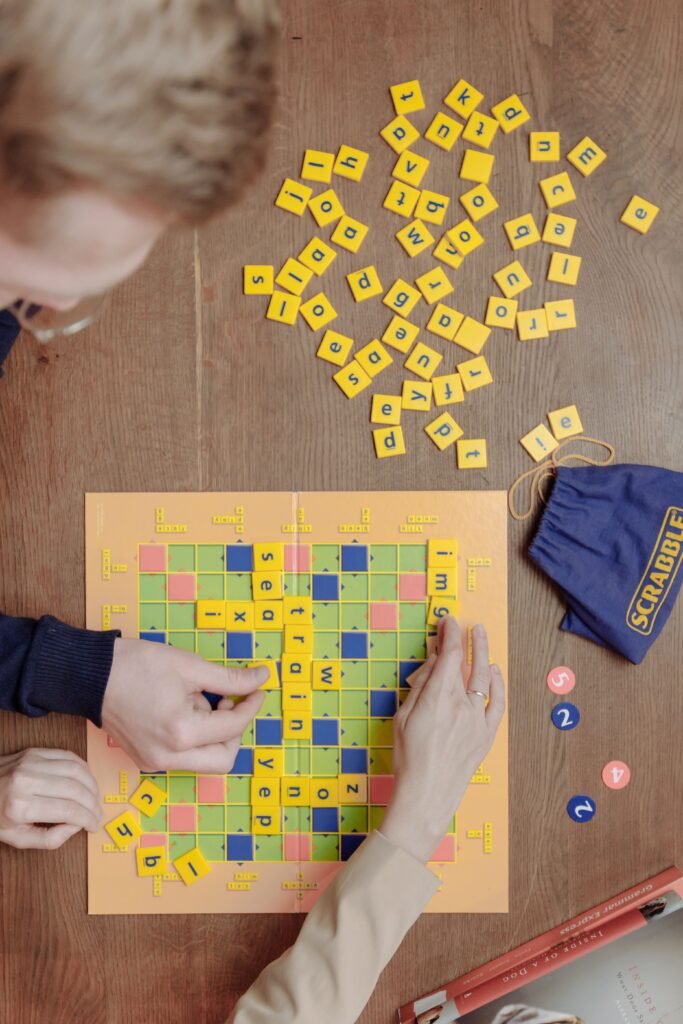
📔Importance of ‘Educational Games’ for Peace of Mind & Positivity!
In today’s fast-paced world, people of all ages face increasing levels of stress, mental fatigue, and information overload. School assignments, workplace responsibilities, family commitments, and constant exposure to digital devices can leave the mind feeling overwhelmed. Finding activities that both educate and relax the mind has become more important than ever. One of the most effective and enjoyable ways to achieve this balance is through educational games.
Educational games combine learning with entertainment, allowing individuals to develop knowledge and skills while enjoying the process. Unlike activities that involve passive entertainment, educational games actively engage the brain through challenges, puzzles, quizzes, memory exercises, strategy, mathematics, language learning, science experiments, and creative thinking. As players solve problems and achieve goals, they experience a sense of accomplishment that promotes positivity and emotional well-being.
These games are not limited to children. Teenagers, adults, and older adults can all benefit from educational games that stimulate the mind, strengthen memory, improve concentration, and encourage lifelong learning. More importantly, educational games provide a healthy way to reduce stress and cultivate a peaceful, optimistic mindset.
Educational Games Keep the Mind Active
The human brain thrives when it is challenged with meaningful activities. Educational games encourage players to think critically, make decisions, recognize patterns, and solve problems.
Instead of allowing the mind to become distracted by unnecessary worries, educational games redirect attention toward productive thinking. Every puzzle solved, question answered, or level completed strengthens mental engagement and keeps the brain active.
Educational games help improve:
- Concentration
- Logical thinking
- Memory
- Observation skills
- Decision-making
- Creative thinking
- Mental flexibility
Regular mental exercise helps individuals remain mentally sharp while reducing feelings of boredom and inactivity.
A Healthy Way to Reduce Stress
Stress often develops when people become overwhelmed by daily responsibilities or spend excessive time thinking about problems. Educational games offer a refreshing mental break by encouraging focused attention on enjoyable learning activities.
When individuals become immersed in solving puzzles or completing educational challenges, their minds naturally shift away from stressful thoughts. This temporary escape provides emotional relief while keeping the brain positively occupied.
Some educational games require calm thinking instead of speed, allowing players to relax while gradually solving problems. This combination of learning and relaxation makes educational games an excellent stress-management tool.
Ways educational games reduce stress:
- Encourage focused attention.
- Reduce overthinking.
- Provide enjoyable challenges.
- Create feelings of achievement.
- Improve emotional balance.
- Promote relaxation.
- Increase positive thinking.
Even spending twenty or thirty minutes playing educational games can refresh the mind after a busy day.
Educational Games Encourage Positive Thinking
Positive thinking grows when people experience progress, solve challenges, and achieve meaningful goals. Educational games provide frequent opportunities for success through gradual learning and improvement.
Each completed puzzle or correctly answered question builds confidence and encourages players to continue learning. Instead of fearing mistakes, players learn that errors are part of the learning process.
This growth mindset promotes optimism because individuals begin to understand that persistence leads to improvement.
Positive experiences during educational games help develop:
- Self-confidence
- Motivation
- Patience
- Determination
- Optimism
- Emotional resilience
These qualities extend beyond the game itself and positively influence everyday life.
Learning Becomes Enjoyable
Traditional learning sometimes feels repetitive or stressful, particularly when students focus only on examinations and grades. Educational games transform learning into an enjoyable experience by introducing interactive challenges, rewards, and curiosity.
Children often remember information more effectively when learning feels exciting rather than forced. Adults also benefit because enjoyable learning encourages lifelong curiosity.
Educational games make subjects like mathematics, languages, geography, history, and science more engaging through hands-on participation.
Learning through games often includes:
- Solving mysteries.
- Completing quizzes.
- Building structures.
- Matching patterns.
- Exploring virtual environments.
- Answering interactive questions.
- Working through logical challenges.
These activities make education both memorable and enjoyable.
Better Concentration and Focus
Modern life is filled with distractions. Smartphones, television, and social media frequently interrupt our attention.
Educational games strengthen concentration because players must remain focused in order to succeed.
Many games require individuals to:
- Observe carefully.
- Remember important details.
- Follow instructions.
- Plan several steps ahead.
- Solve increasingly difficult challenges.
This repeated practice gradually improves attention span and mental discipline.
Students often discover that stronger concentration developed through educational games also helps them perform better during schoolwork and examinations.
Educational Games Improve Memory
Memory is like a muscle—the more it is exercised, the stronger it becomes.
Educational games frequently challenge players to remember:
- Numbers
- Words
- Pictures
- Patterns
- Locations
- Sequences
- Instructions
Regular memory practice strengthens the brain’s ability to store and retrieve information efficiently.
Improved memory benefits people throughout every stage of life, from children learning new vocabulary to older adults maintaining cognitive health.
Educational Games Develop Problem-Solving Skills
Every educational game presents challenges that require thoughtful solutions.
Players learn to:
- Analyze situations.
- Compare different options.
- Recognize patterns.
- Test possible solutions.
- Learn from mistakes.
- Adapt new strategies.
Instead of giving up after failure, educational games encourage persistence.
Each unsuccessful attempt becomes a learning opportunity rather than a disappointment.
This problem-solving mindset becomes valuable in education, careers, and personal decision-making.
Encouraging Creativity and Imagination
Not all educational games focus solely on facts and numbers.
Many encourage creative thinking through activities such as:
- Building designs.
- Story creation.
- Art projects.
- Music composition.
- Engineering challenges.
- Design puzzles.
- Creative writing exercises.
These games allow individuals to explore their imagination while strengthening critical thinking skills.
Creativity also contributes to emotional well-being because it provides healthy self-expression and encourages innovative thinking.
Educational Games Promote Patience
Many educational games require careful thinking rather than quick reactions.
Players gradually learn that success often comes through patience, observation, and repeated practice.
Important lessons include:
- Taking one step at a time.
- Learning from mistakes.
- Remaining calm during challenges.
- Thinking carefully before making decisions.
- Celebrating gradual progress.
These habits help individuals remain emotionally balanced during difficult situations in everyday life.
Building Self-Confidence
Every completed level, solved puzzle, or mastered skill creates a sense of accomplishment.
Educational games provide continuous opportunities for success through achievable goals.
As confidence grows, players become more willing to explore new ideas and tackle increasingly difficult challenges.
This positive cycle of learning, achievement, and confidence encourages lifelong curiosity while reducing fear of failure.
Most importantly, educational games remind us that improvement is always possible through consistent effort, patience, and a positive attitude.
Educational Games Benefit People of All Ages
One of the greatest strengths of educational games is that they are suitable for everyone. Regardless of age, people can enjoy learning while improving their mental well-being.
Children
Educational games help children build strong academic and social foundations. They improve language skills, mathematical understanding, memory, creativity, and problem-solving abilities. Children also develop patience and confidence as they complete challenges and receive positive feedback.
Teenagers
Teenagers often experience pressure from school, exams, and social responsibilities. Educational games provide a productive way to relax while strengthening critical thinking, concentration, and decision-making skills. These games also encourage healthy competition and goal setting.
Adults
Adults benefit from educational games by keeping their minds active despite busy schedules. Puzzle games, language-learning apps, financial simulations, and strategy games help reduce stress while improving mental flexibility and lifelong learning.
Older Adults
For senior citizens, educational games are an enjoyable way to maintain cognitive health. Memory games, word puzzles, crosswords, Sudoku, and brain-training activities help stimulate the mind and encourage regular mental exercise. They also provide a sense of achievement and purpose.
Educational Games Strengthen Family Relationships
Educational games are excellent activities for bringing families together. Instead of spending all their free time watching television or using separate devices, family members can enjoy games that encourage learning and teamwork.
Examples include:
- Word games
- Trivia quizzes
- Board games
- Geography challenges
- Mathematics puzzles
- Memory games
- Science experiments
Playing together encourages communication, laughter, cooperation, and mutual support. Parents can guide children through challenges, while children often surprise adults with creative solutions. These shared experiences strengthen family bonds and create happy memories.
Educational Games Improve Social Skills
Many educational games encourage teamwork and respectful communication. Whether played in classrooms, clubs, or at home, they help participants learn valuable social skills.
Players learn to:
- Listen carefully to others.
- Share ideas respectfully.
- Work together toward common goals.
- Accept different opinions.
- Encourage teammates.
- Celebrate others’ achievements.
- Resolve disagreements calmly.
These experiences build empathy and cooperation, which contribute to a more positive and supportive environment.
Traditional and Digital Educational Games
Educational games come in many forms. Both traditional and digital options offer unique benefits.
Traditional Educational Games
These include board games, flashcards, puzzles, card games, building blocks, and educational toys. They encourage face-to-face interaction and reduce screen time.
Digital Educational Games
Educational apps and computer-based learning games often provide interactive lessons, instant feedback, and adaptive difficulty levels. They make learning engaging through colorful graphics, animations, and rewards.
The healthiest approach is to maintain a balance. Enjoying both traditional and digital educational games allows individuals to benefit from technology while still valuing hands-on learning and personal interaction.
Educational Games Encourage Lifelong Learning
Learning should not stop after school or university. Educational games inspire curiosity throughout life by introducing new topics in an enjoyable way.
People may discover interests in:
- History
- Geography
- Languages
- Astronomy
- Nature
- Mathematics
- Science
- Art
- Music
- Technology
Curiosity keeps the mind active and encourages continuous personal growth. Every new fact learned through a game contributes to greater confidence and intellectual development.
Important Benefits of Educational Games
Educational games positively influence many areas of life.
Mental Benefits
- Improve memory.
- Strengthen concentration.
- Develop logical reasoning.
- Encourage creative thinking.
- Improve problem-solving abilities.
- Increase mental flexibility.
- Keep the brain active.
Emotional Benefits
- Reduce stress.
- Promote relaxation.
- Build confidence.
- Encourage optimism.
- Improve emotional balance.
- Develop patience.
- Increase motivation.
Social Benefits
- Strengthen family relationships.
- Encourage teamwork.
- Improve communication skills.
- Promote cooperation.
- Build friendships.
- Teach respect for others.
- Encourage healthy competition.
Educational Benefits
- Make learning enjoyable.
- Improve academic performance.
- Strengthen critical thinking.
- Develop curiosity.
- Increase knowledge retention.
- Encourage lifelong learning.
- Build self-discipline.
Tips for Using Educational Games Effectively
To receive the greatest benefits, educational games should become part of a balanced daily routine.
Helpful suggestions include:
- Choose games appropriate for your age and interests.
- Set reasonable daily time limits.
- Balance digital games with traditional activities.
- Play together with family and friends whenever possible.
- Focus on learning rather than simply winning.
- Take regular breaks during long gaming sessions.
- Celebrate progress and improvement.
- Explore different educational topics to keep learning exciting.
When used wisely, educational games become powerful tools for both education and emotional well-being.
Creating a Positive Daily Routine
Educational games can easily become part of a healthy lifestyle.
For example:
- Begin the day with a short word puzzle.
- Spend twenty minutes practicing a language-learning game.
- Play a family board game after dinner.
- Solve a Sudoku or crossword before bedtime.
- Challenge yourself with a weekly science or geography quiz.
These simple habits keep the brain engaged while creating enjoyable moments of relaxation throughout the week.
A Positive Mind Leads to a Positive Life
One of the greatest gifts educational games provide is a positive outlook. Every challenge solved teaches persistence. Every mistake becomes a lesson. Every achievement builds confidence.
Instead of feeling discouraged by difficulties, players gradually develop the habit of approaching challenges with curiosity and determination.
This positive mindset often extends into school, work, relationships, and personal goals. People become more willing to learn, adapt, and continue improving throughout life.
Educational games remind us that growth is a continuous journey, and every small success contributes to greater confidence and happiness.
Conclusion
Educational games are much more than a source of entertainment—they are valuable tools for learning, mental engagement, and emotional well-being. By combining knowledge with enjoyment, they help people reduce stress, strengthen memory, improve concentration, and develop a positive attitude toward learning.
Whether solving puzzles, answering quizzes, building creative projects, or exploring educational apps, individuals of all ages can benefit from these meaningful activities. Educational games encourage curiosity, patience, teamwork, and confidence while providing a healthy escape from the pressures of daily life.
Most importantly, they show that learning can be enjoyable, relaxing, and inspiring. Every completed challenge, every new skill learned, and every moment of creative thinking contributes to a calmer mind and a more optimistic outlook. By making educational games a regular part of daily life, anyone can nurture peace of mind, lifelong learning, and lasting positivity while building a brighter and more fulfilling future.